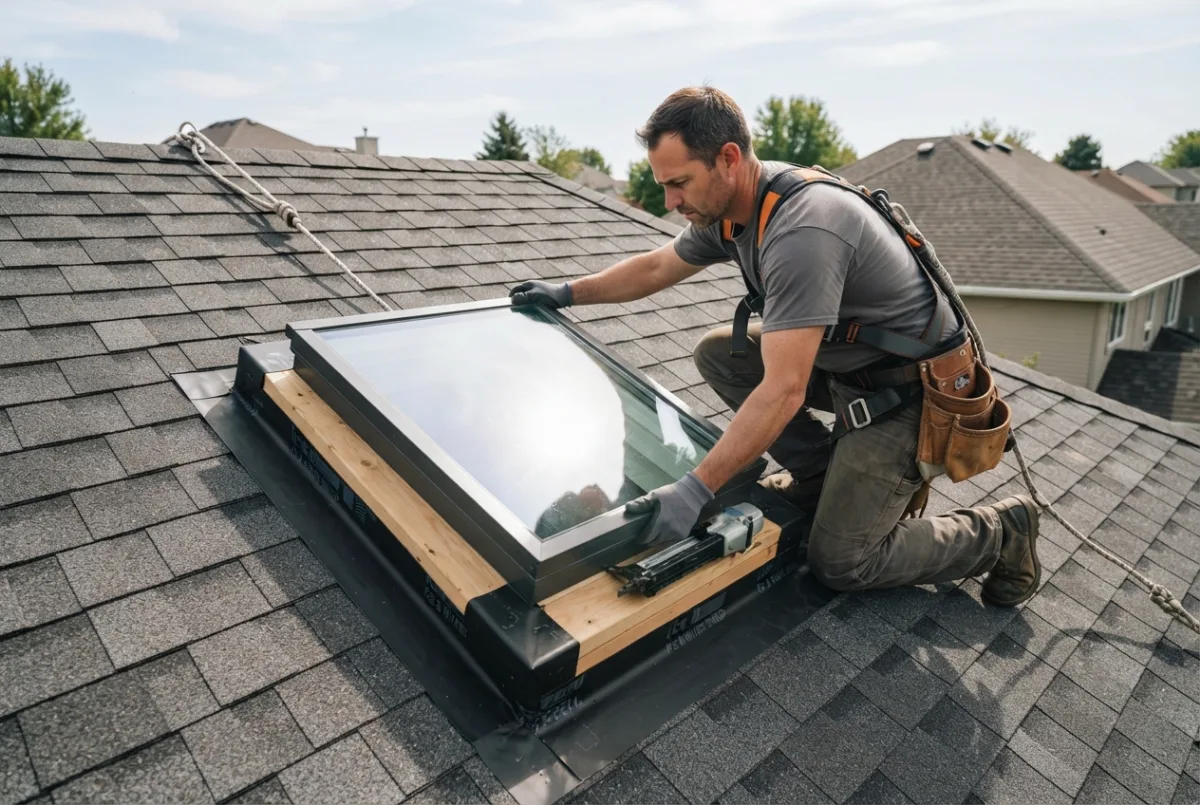
The skylight is usually the messenger
A skylight is a hole cut through a roof, and a hole through a roof is a flashing problem with a window in it. The glass or acrylic is generally the most durable part of the assembly. The part that has to keep water out is the metal around it and how that metal integrates with the roof covering.
When that flashing fails, water enters above or beside the unit, runs down the inside of the shaft, and emerges at the bottom edge of the frame. From inside the room, it looks unambiguously like the skylight is leaking. Replacing the unit in that situation is expensive and does not stop the leak, because the flashing that caused it is what gets reused or reinstalled the same way.
What actually fails, in order
- Step and head flashing around the curb. The same details as anywhere else a roof meets a vertical surface, and they fail the same way. Sealant used instead of correctly lapped metal is the usual underlying cause.
- The absence of a cricket. On a wide skylight, the upslope side dams water and debris unless there is a diverter behind it. Without one, water sits against the head of the curb through every storm.
- Perished seals on the unit. The gasket between the glazing and the frame does eventually go, particularly on older units. This is a genuine unit failure, and it is less common than flashing failure.
- Failed sealed units. On double-glazed skylights, a blown seal shows as permanent haze or moisture between the panes. This cannot be repaired, and it is not a leak.
- Degraded acrylic domes. Covered below. This is a Central Valley speciality.
What sun does to an acrylic dome here
Older houses around Elk Grove often have the bubble-style acrylic dome skylight rather than a flat glass unit. Acrylic does not cope indefinitely with the UV exposure it gets on a roof in this climate.
It yellows, which is the visible part. More importantly it chalks and goes brittle, losing the flexibility it needs to handle the daily thermal movement of a roof. Once brittle, it cracks, and the cracks are often hairline and hard to see from the ground while being entirely sufficient to pass water.
A dome that has gone yellow and dull is not a cosmetic issue to live with. It is a component near the end of its service life, and it is worth planning for rather than waiting for.
Leak or condensation?
Watch when it appears. Water during rain, at one point, is a leak. Water on a cold morning with no rain, spread evenly over the glass, is condensation, and the fix is ventilation and humidity control rather than roofing. Skylights over bathrooms and kitchens produce this constantly and get blamed for leaking when nothing is wrong with them at all.
Time it with the roof
Skylight work and roof work share the same access and the same flashing. Almost all of the cost of replacing a skylight is getting the covering open around it and integrating the new flashing back in, not the unit itself.
So the economics are straightforward: if a replacement is coming in the next few years and your skylights are mid-life or older, do them together. Putting a twenty-year-old skylight back under a brand new roof guarantees that someone opens that roof again, sooner than you would like, and pays for the same access twice.
If the roof is not due and the skylight is leaking, a flashing repair is entirely reasonable on its own. The flashing detail is the same family of work covered under flashing repair.
Skylight questions
Water is dripping from my skylight. Is the skylight broken?
Probably not. In most cases the unit is intact and the water is arriving from the flashing around it, running down the inside of the shaft and appearing at the frame. The skylight is simply the lowest point where it becomes visible. That distinction decides whether you are buying a repair or a replacement.
How do I tell a leak from condensation?
Timing and pattern. A leak appears during or shortly after rain and is usually concentrated at one point. Condensation appears on cold mornings without rain, forms evenly across the glass, and is worse in bathrooms and kitchens. Condensation is a ventilation and humidity problem rather than a roofing one.
My plastic dome has gone yellow and brittle. Can it be repaired?
Not usefully. Acrylic domes chalk, yellow and become brittle under sustained UV, and once that has happened the material itself has degraded. Replacement is the realistic option, and it is a good moment to consider a glass unit instead, which does not have the same failure mode.
Should I replace the skylight when I replace the roof?
If it is anywhere near mid-life, yes. The flashing has to come off and go back on regardless, which is most of the labour of a replacement. Putting an old unit back under a new roof means paying for that access twice, and it is the single most common regret people have a few years after a re-roof.
Can a skylight be removed entirely?
Yes, and it is sometimes the right answer. Closing up a skylight that is old, leaking and not much loved means framing and decking the opening, matching the roof covering over it, and patching the ceiling below. On a roof that is being replaced anyway this is often cheaper than a new unit.