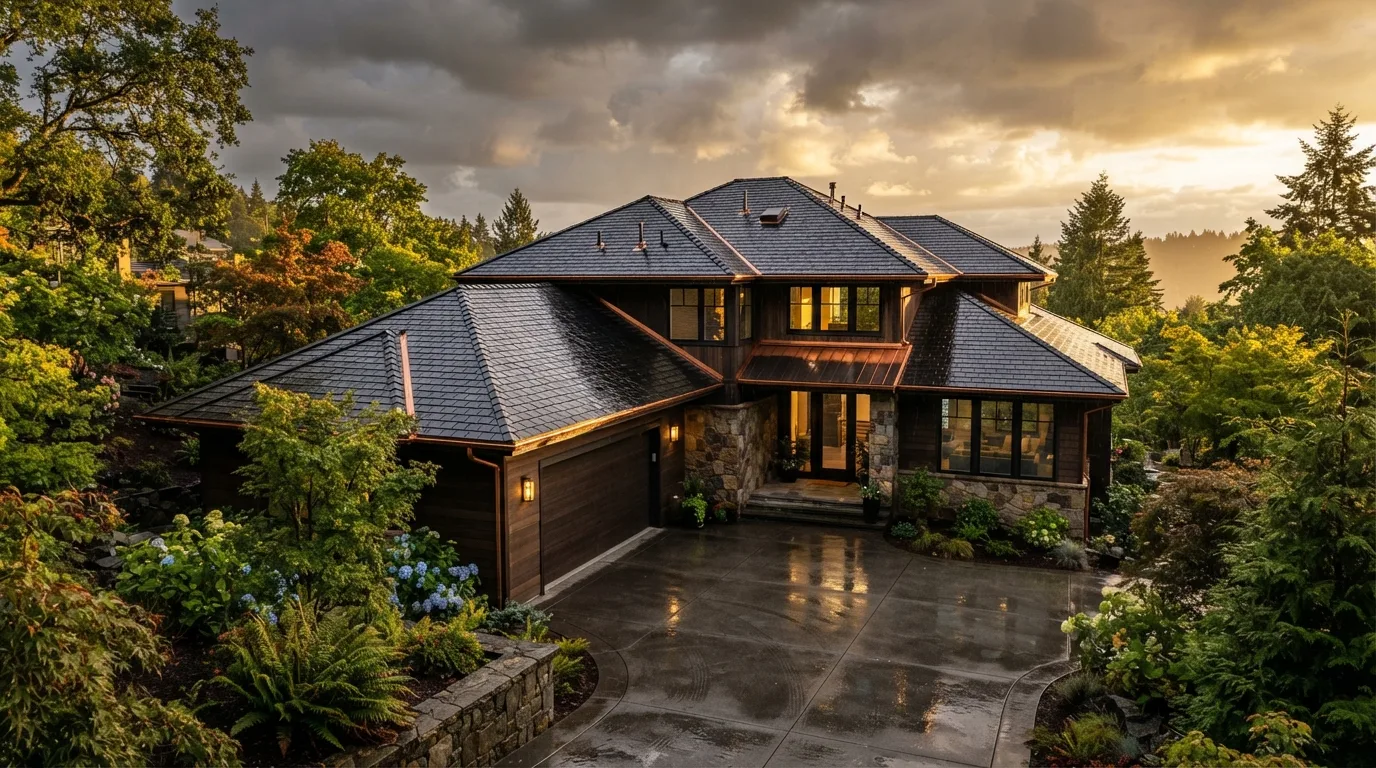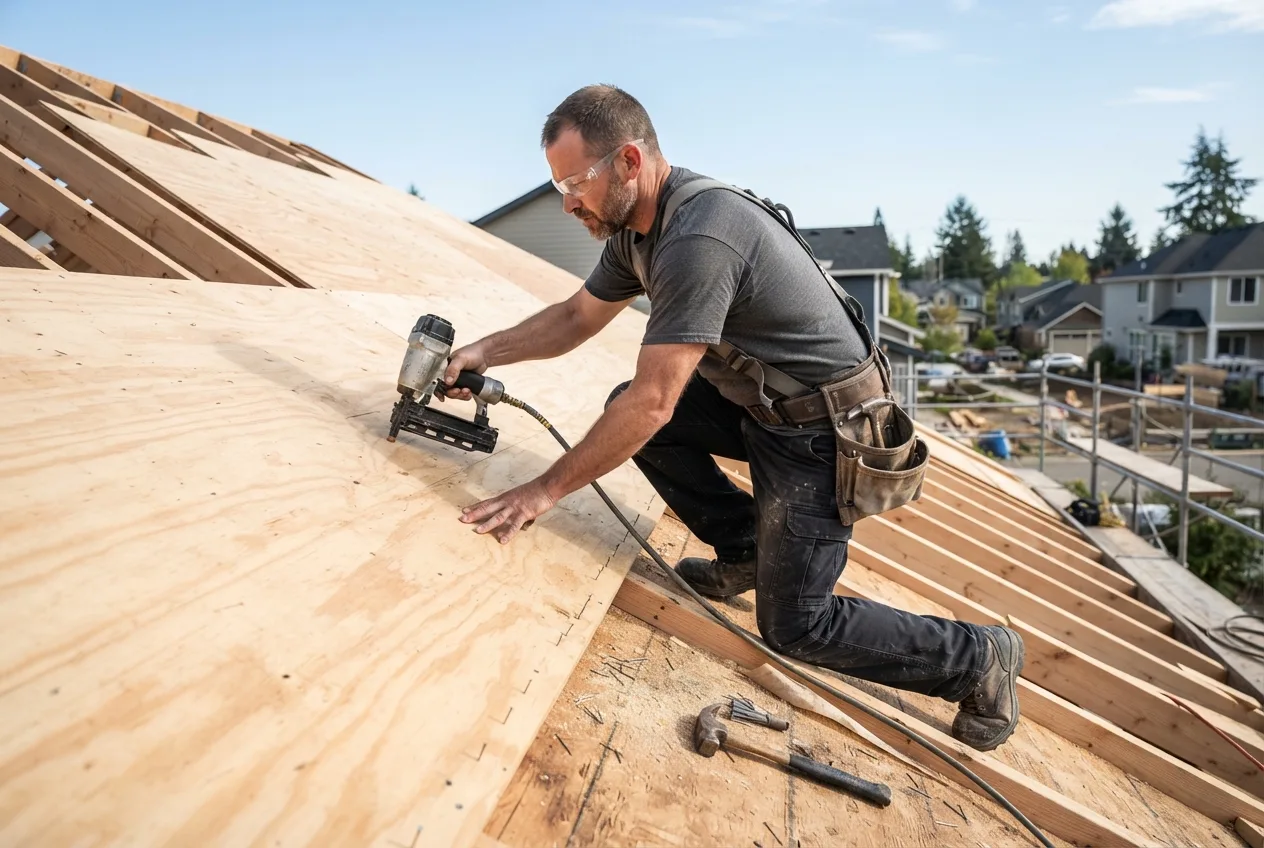
Why this is a different job from a re-roof
Homeowners often use the two words interchangeably, and contractors usually understand what is meant, but the work genuinely differs in ways that change both the price and the timeline.
There is no tear-off
On a replacement, the first day is spent removing the old covering, filling a dumpster and finding out what is underneath. None of that happens here. That removes labor, disposal cost, and the single largest source of mid-job price changes on a re-roof.
The deck is new, so nothing is hidden
The biggest unknown in an Elk Grove re-roof is the sheathing, because on most local homes nobody has seen it since the house was framed. On a new build the deck is installed and inspected in front of everyone. A quote for installation can therefore be a firmer number than a quote for replacement, and you should expect it to be.
The material decision happens earlier
This is the practical advantage most people miss. On an existing house, moving to a heavier covering means proving the framing can carry it: Elk Grove requires a structural analysis before it will issue a permit to re-roof with tile in place of a lighter material, because tile and similar composites exceed 350 pounds per square. On a new structure the framing can simply be designed for tile from the outset. If you want a tile roof, say so at design stage, not after the walls are standing.
It sits inside someone else's schedule
A replacement is booked whenever you and the contractor agree. An installation is booked around framing inspection, and around every trade waiting for the building to be dry. Getting dried in is a milestone the rest of the project hangs off, which is why roofing crews on new builds are scheduled well ahead and why a slipped framing date moves the roof date with it.
Ask for the roofing scope as its own line
On new construction the roof is often buried inside a builder's overall contract, which makes it hard to tell whether the allowance is generous or thin. Ask for the roofing scope broken out: material and profile, underlayment, flashing details, ventilation, and who carries the warranty. It is the only way to compare it against anything else you are quoted.
What gets installed, not just what covers it
A roof is an assembly, and on a new build you are specifying all of it rather than matching what is already there.
- Sheathing. Installed over the framing and inspected before anything covers it. On new construction this is part of the structure's inspection sequence.
- Underlayment. The actual waterproofing layer. On a tile roof it is the component that will fail first and determine when the roof next needs work, so it is worth more attention than the tile.
- Flashing and penetrations. Valleys, sidewalls, chimneys, vents and skylights. Roofs leak at details, not in the middle of a plane, and new construction is the one chance to get every detail done properly rather than retrofitted.
- Ventilation. Intake and exhaust sized for the attic volume. Get this wrong on a new build and you shorten the life of a roof that has not been rained on yet.
- Drainage. Gutters, downspouts and where the water actually goes. In a climate that delivers most of its rain across a handful of winter fronts, a system that copes with light rain and fails under a real storm is a common oversight.
Material, decided while you still have the choice
The Central Valley consideration is heat rather than storms. A roof here spends far more of its life hot than wet, and thermal cycling is what ages it.
- Architectural asphalt shingles. The default on most local housing, the cheapest to frame for, and the simplest to repair later.
- Concrete tile. Common across Elk Grove and genuinely long-lived, but heavy. On a new build that weight is a design input rather than an obstacle. Remember the underlayment beneath it is what sets the maintenance clock.
- Metal. Handles heat well and lasts a long time, at a higher up-front cost. Worth pricing on a building you intend to keep.
The warranty question on a new build
Two warranties exist and they are not the same thing. The manufacturer warranty covers the material. The workmanship warranty covers the installation, and it comes from whoever did the work, not from the builder who hired them. On new construction those can be different companies. Ask in writing who holds the workmanship warranty and for how long, before the roof goes on.
Permits on new construction
Roofing on a new structure is generally handled inside the building permit for that structure, rather than the standalone permit a re-roof requires. Elk Grove's re-roofing rules, the 100 square foot threshold and the 3-1/2 pounds per square foot weight threshold, are written for work on existing roofs.
Because that depends entirely on what you are building, confirm it directly with the Elk Grove Building Division on (916) 478-2235 rather than taking anyone's word for it, including ours. An addition and a detached patio cover are not always treated the same way.
Checking the contractor
Same rule as any other roofing work. California requires a CSLB C-39 license for roofing where labor and materials exceed $500, and licensed contractors must show that number in their advertising. On new construction the roofer is often subcontracted by a builder, so ask who is actually going on the roof and verify that company, not just the builder.
Installation questions
Is roof installation the same as roof replacement?
No. Replacement means removing an existing covering and putting a new one on the same structure. Installation is the first roof a structure has ever had, on new framing with new sheathing. There is no tear-off, no disposal of the old covering, and none of the uncertainty about what condition the decking is in.
What kinds of jobs count as installation?
New homes, room additions, detached garages, workshops, patio and porch covers, accessory dwelling units, and outbuildings. Anything where the roof is going onto a structure that did not previously have one.
Do I need a separate roofing permit?
Usually not a separate one. Roofing on new construction is generally covered by the building permit for the structure itself, rather than the standalone permit a re-roof needs. Because that depends on the scope of your project, confirm it with the Elk Grove Building Division on (916) 478-2235 rather than assuming either way.
Can I choose any material on a new build?
Far more freely than on a re-roof, yes. On an existing house, switching to something heavy like concrete tile triggers a structural analysis because the framing was not designed for the load. On a new structure the framing can be engineered for the material from the start, so the decision belongs at design stage, not after the walls are up.
When in the build does the roof go on?
After framing and sheathing are inspected, and before the interior work that depends on the building being dry. Getting the structure dried in is one of the milestones the rest of the schedule hangs off, which is why roofing on a new build is booked around other trades rather than whenever a crew is free.
Is installation cheaper than replacement?
On the roofing line specifically it can be, because there is no tear-off labor, no disposal, and no decking repair. That does not make the overall project cheaper, and a new structure brings its own costs. Ask for the roofing scope to be quoted separately so you can compare it against anything else you are being shown.
Sources
Every local figure on this page comes from one of these. Check them yourself.