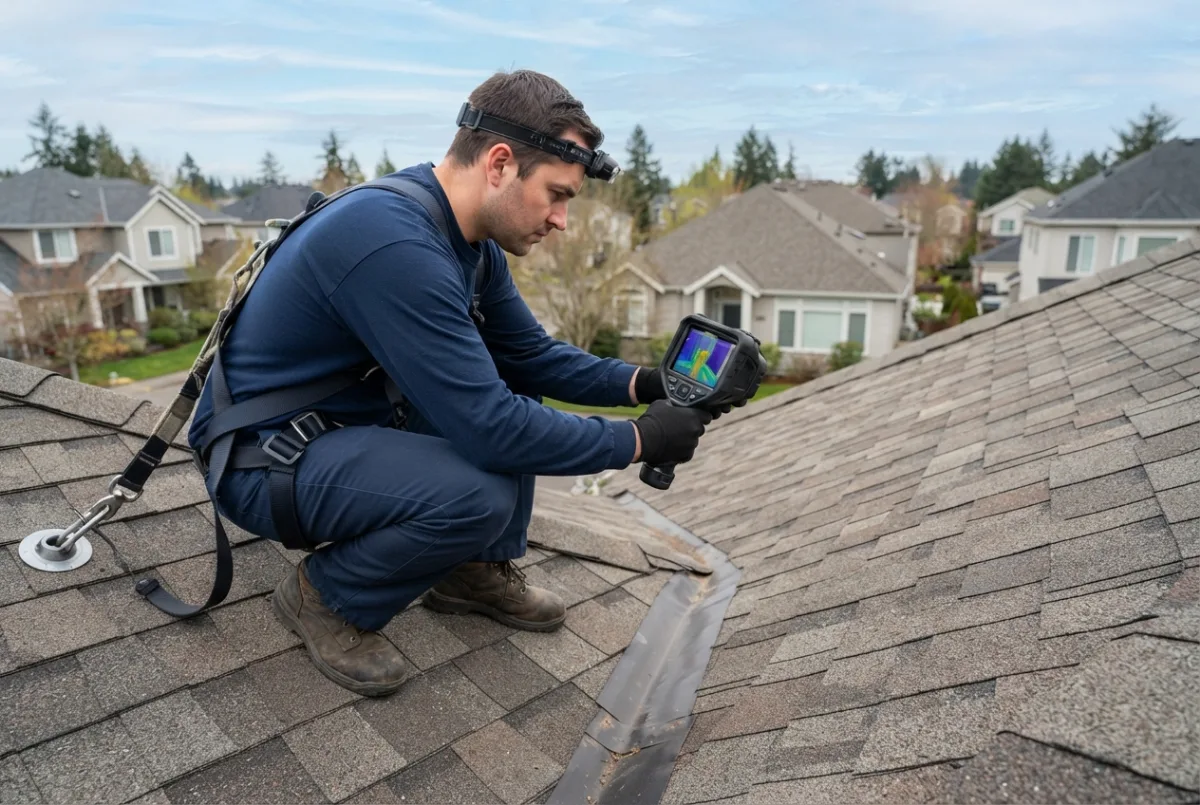
When an inspection earns its cost
A roof does not need inspecting on a schedule the way a furnace does. There are four situations where one genuinely changes what you do next.
- Before you buy or sell. A roof near the end of its life shows up in the buyer's inspection and becomes a price negotiation. Knowing first means you choose whether to fix it, disclose it or price it in.
- After a wind event. Wind damage hides well. A shingle can be lifted, folded and dropped back looking untouched while the mat is broken and the seal is gone.
- Around the twenty-year mark. Which, given a median local build year around 2000, is where a large share of Elk Grove homes now sit.
- When a leak will not be traced. A leak that has defeated one repair already usually means the entry point was never found.
What a real inspection includes
The roof surface
Condition of the covering across each slope, not just the visible one from the street. Granule loss, curling, brittleness and any area where shingles are no longer sealed down. On tile, whether pieces are cracked or slipped, and how the field has been walked previously, because careless access breaks tile.
Flashing and penetrations
Where roofs actually leak. Pipe boots, valleys, sidewall and headwall flashing, chimney details and skylights. Sealant used where flashing should be is a common builder shortcut with a predictable expiry date, and a good inspector will name it.
The attic
Half the value of the inspection and the half most often skipped. Water tracks on the underside of the decking, staining on rafters, daylight through the sheathing, wet or compressed insulation, and rusted nail points that indicate long-term moisture rather than a single event. Evidence of past leaks shows here long before it shows on a ceiling.
Drainage
Gutters, downspouts and how water actually leaves the roof. In a climate where most of the annual rainfall arrives across a handful of winter fronts, drainage that copes with light rain and fails under a real storm is a common and fixable cause of what looks like roof failure.
Ventilation
An attic that cannot exhaust heat cooks the roof from underneath and shortens the life of whatever is on top of it. Worth knowing about before you pay for a new roof, because installing one over a ventilation problem just starts the same clock again.
Free inspection, or sales visit?
Both exist and both can be legitimate. The difference is who the report serves. A free inspection from a contractor who wants the replacement job is worth having, as long as you read it knowing that. If you are weighing repair against replacement on an expensive roof, a paid inspection from someone not bidding the work removes the conflict entirely. Be wary of anyone who finds urgent damage and wants a signature the same visit.
What the report should contain
- Photographs of everything raised. Not a summary, the actual images.
- Condition by area, so you can tell a localized problem from a roof-wide one.
- Attic findings, separately from surface findings.
- An estimate of remaining service life, with the reasoning behind it.
- A split between urgent and deferrable. Everything marked urgent is a red flag about the inspector, not the roof.
Check the license before anyone goes up a ladder
California requires a CSLB C-39 license for roofing work over $500, and licensed contractors must display that number in their advertising. Verify it free on the CSLB site. This matters more for inspections than for most jobs, because you are about to make an expensive decision based on what this person tells you.
Inspection questions
What does a roof inspection actually cover?
A useful inspection covers the covering itself, the flashing and penetrations, the valleys, the gutters and drainage, and the underside of the decking from inside the attic. The attic half matters as much as the roof half, because water damage shows there first. An inspection that never leaves the driveway is not an inspection.
When is it worth paying for one?
Before buying or selling, after a significant wind event, when a roof passes roughly twenty years, and when you have a leak nobody has been able to trace. Outside those situations, an annual look at the gutters and a glance at the attic after heavy rain covers most of the value.
Is a roofer inspection the same as a home inspection?
No. A general home inspector assesses the roof briefly as one system among many, often from the ground or a ladder at the edge. A roofing contractor is looking specifically at how much service life is left and what it would cost to address. The two reports answer different questions and a lender or buyer may want both.
Should the inspection be free?
Free inspections are common and are usually a sales visit, which is not automatically a problem as long as you know that is what it is. A paid inspection buys you a written report from someone with no stake in selling you the work. If you are trying to decide whether to replace, the paid version is worth considering.
What should I get in writing?
Condition of the covering and flashing, anything found in the attic, photographs of every issue raised, an estimate of remaining service life, and a clear separation between what needs doing now and what can wait. Photographs are the part people forget to ask for and the part that matters most later.
Sources
Every local figure on this page comes from one of these. Check them yourself.